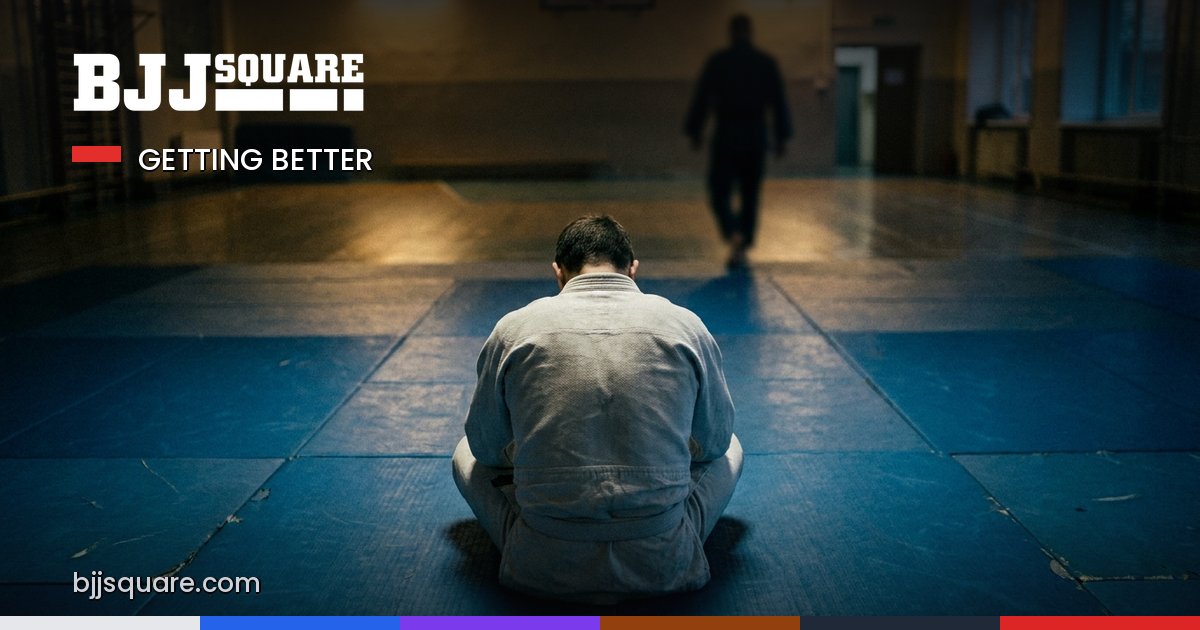
Getting submitted is how you learn
There is nothing to win in the gym. Everybody repeats that line and almost nobody applies it, and the difference shows up over the long run.
BJJ Square · Updated on 08/11/2026
There is always a temptation in sparring: playing not to lose. Staying in the positions you know, using strength where you have no answers, avoiding the partners who give you trouble. It works, in the sense that you finish that round even. And it costs you the next six months.
Why losing pays
Because jiu-jitsu is learned from problems, and problems only arrive if you put yourself in them. Somebody who spends sparring defending what they already know how to do never meets the situations they cannot handle — and so never learns them. It is a simple, unforgiving mechanism.
- Try the new thing even when it is going to cost you the position. That is the only way it becomes yours.
- Roll with the people who give you trouble, not with the ones who make you feel good.
- Start from underneath when you have the choice. The worst position is the one that teaches you most.
- Tap without drama. It is information, not a verdict: almost eight submission injuries out of ten happen to the person taking the submission, and it is the one thing under your control. We cover it here: tapping early.
What ego costs
Not only in technique. People who roll every round as if it counted get hurt more — using strength where structure is needed, resisting where they should give — and make everybody else's training worse, because they become the partner nobody wants to try new things with.
Note There is a question that helps you spot it: when was the last time you tried something in sparring that you did not know how to do? If the answer is “I cannot remember”, you are defending a scoreline that does not exist.
The belt paradox
It gets harder as you go up, not easier: at white belt losing is normal, at purple there are people watching and there is the idea that you ought to win. It is why some people stop improving exactly when they have the tools to do it — and in a study of 1,140 practitioners a higher belt was associated with more injuries, which is perhaps the same phenomenon seen from the other side.
What changes in practice
You stop measuring training by how the rounds went and start measuring it by what you tried. It is also the only way to make notes worth keeping: if every round ends in a defensive stalemate, there is nothing to write down. Taking notes.
Frequently asked questions
- Is it normal to lose all the time in training at the start?
- Yes, and it is how the thing is supposed to work: at white belt you spend most of sparring in trouble, and that is where you learn. If anything the problem is the opposite, that is, defending a result instead of trying new things.
- Why is playing not to lose in sparring a bad idea?
- Because staying in the positions you know means you never meet the situations you cannot handle, and so never learn them. The round ends even and the months that follow bring no progress.
- Is going full intensity every round in the gym a problem?
- Often yes: people who treat every round as a competition tend to use strength where structure is needed, get injured more, and become the partner nobody wants to try new techniques with.
- How do you tell whether you have stopped improving?
- One useful question is when you last tried something in sparring that you did not know how to do. If you cannot remember, you are probably defending a scoreline that does not exist.
Share this guide
We are on Instagram
The gyms on the map, the history of jiu-jitsu and the stories behind the names of the techniques.
Follow @bjjsquareRead next
- Tapping in time: the only skill that genuinely prevents anythingAmong injuries caused by a submission, 78.9% land on the person receiving it. It is the most useful figure jiu-jitsu research has produced.
- Taking notes: what separates people who improve from people who log hoursAfter a year of training you have seen hundreds of details and you remember a handful. That is not a flaw in you: it is how memory works when the volume is high.
- Why so many people quit at blue beltEverybody calls it the blue belt blues. It is the most talked about and least measured thing in jiu-jitsu. But the mechanism it describes is real, and it has a logic.