Why it's called the kimura
The most famous hold in jiu-jitsu carries the name of the man who used it against Hélio Gracie, not of the man who invented it. And it is a defeat the Gracies were the first to tell.
BJJ Square · Updated on 08/11/2026
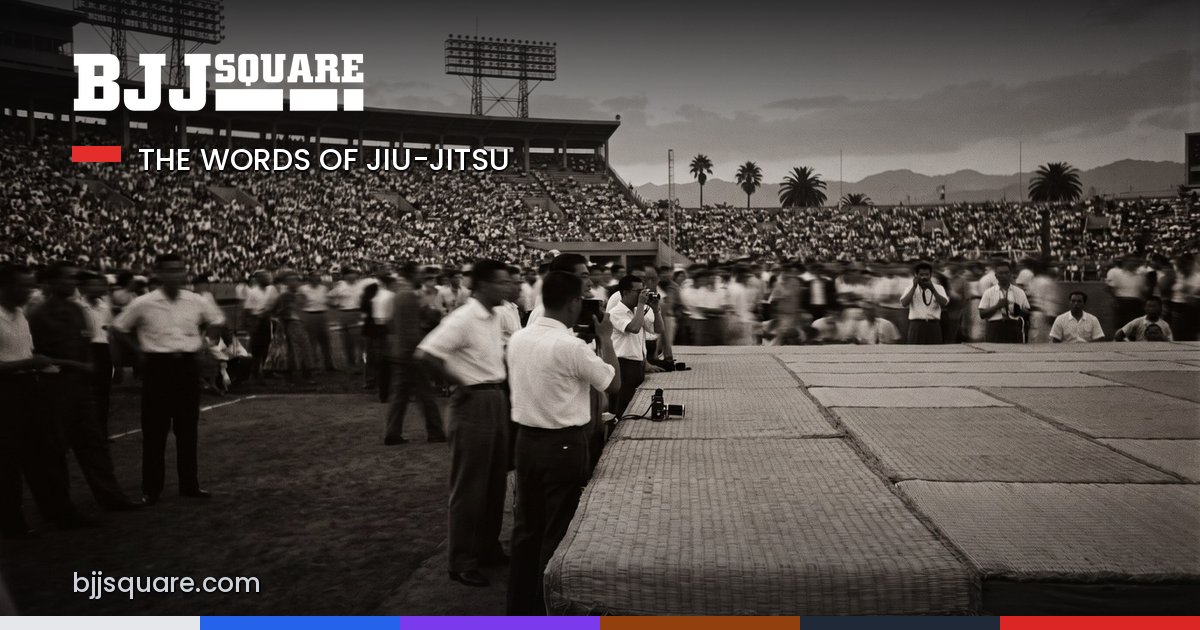
On 23 October 1951, at the Maracanã stadium in Rio de Janeiro, in front of around twenty thousand people, Hélio Gracie faces Masahiko Kimura. The rules are what we would now call pure grappling: three ten-minute rounds, every hold allowed, won only by submission or by the corner stepping in.
In the second round Kimura closes a shoulder lock. Hélio does not tap. The hold tightens, the arm gives way, and it is Carlos Gracie — his brother, from the edge of the mat — who throws in the towel. About thirteen minutes have passed in all.
The technique already existed. The name did not
Kimura invented nothing that evening. In judo the hold is called ude garami, “arm entanglement”, and has been on the syllabus forever; in American catch wrestling the same thing is called a double wristlock. Kimura arrived at the Maracanã with a technique every judoka knew.
What he left behind is not the technique: it is the name. And in Brazil, the name was given to him by other people.
When the name actually appeared
The version you hear in the gym says the Brazilians rechristened it “kimura” that same evening, on the back of the fight. The most detailed archive account says something else: that the term — at first kimuriana — appeared in the Brazilian sports press during Kimura's second trip to Brazil, in 1959. Eight years later.
Note This dating comes from Roberto Pedreira's research (“Choque”, vol. 2), the only archive work that addresses the point. The other available sources do not date the adoption of the name at all: it is not a closed question, and it is right to know that.
What we do not know
- What the two men weighed. It was never officially recorded. A difference of ten to fifteen kilos in Kimura's favour is the figure usually quoted, but it is a handed-down estimate, not a measurement.
- How many times the arm gave way. The traditional account says twice; the footage of the match does not allow that to be stated.
- Who, exactly, used the name first. No source says.
Why this story survived
Defeats are usually forgotten. Not this one — and not because somebody used it against the Gracies: because they were the ones telling it, and telling it for decades. Hélio left the Maracanã with a broken arm and his reputation intact, for having gone all the way against an opponent bigger and stronger than him.
That is why the name stayed attached to the hold instead of disappearing. In jiu-jitsu the way you lose weighs as much as the way you win, and that evening at the Maracanã is the most quoted demonstration of it. Every time somebody finishes a kimura in the gym, they are remembering it without knowing.
Note A technique carrying the name of whoever used it against you, rather than of whoever invented it, is not an exception: in jiu-jitsu it is close to the rule. The same happens with the ezekiel and with De La Riva guard.
The other words you will hear at the gym, explained one by one: BJJ glossary.
Frequently asked questions
- Who was Masahiko Kimura?
- A Japanese judoka born in 1917, considered the strongest of his generation. After the war he moved into professional exhibitions abroad, and that is how he ended up in Brazil.
- Who invented the kimura?
- Nobody in Brazilian jiu-jitsu. The hold already existed as ude garami in judo and as the double wristlock in catch wrestling. Kimura gave it the name, not the origin.
- What happened to Hélio Gracie in that match?
- He did not tap. The arm gave way and it was his brother Carlos who stopped the match from outside, after about thirteen minutes.
- When was the name “kimura” born?
- It is not certain. The best documented account places it around 1959, in the Brazilian press, during Kimura's second trip to Brazil — not on the evening of the 1951 match.
Share this guide
We are on Instagram
The gyms on the map, the history of jiu-jitsu and the stories behind the names of the techniques.
Follow @bjjsquareRead next
- Who names jiu-jitsu techniquesAlmost never the people who invented them. Often not even the people who used them. Behind the names of these holds sit four rules that have been repeating for more than seventy years.
- Why it's called the ezekielThe sleeve choke carries the name of a judoka who was only passing through jiu-jitsu. He invented nothing: he brought in something nobody there was using.
- BJJ glossary: the words you will hear at the gymJiu-jitsu is spoken in a mix of Portuguese, English and Japanese. Here is what the things you hear in your first few weeks mean.