Gi or no-gi: the differences, and which to start with
They are the same sport played under two different rules of friction. The difference is not the clothing: it is what you can grab.
BJJ Square · Updated on 08/05/2026
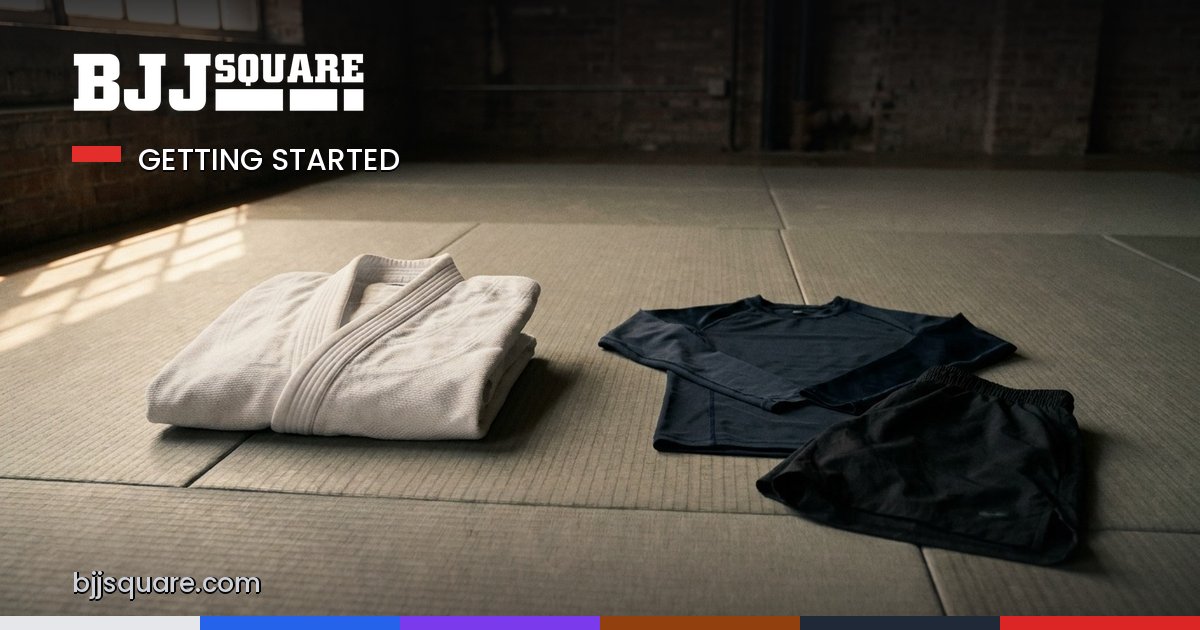
Gi is the kimono: heavy jacket, belt, trousers. No-gi is trained in a fitted top (a rash guard) and shorts or leggings. People arriving from outside assume it is a question of comfort or looks. It is not: it changes what you have in your hands.
The one difference that produces all the others
With the gi you can grab fabric: collar, sleeves, trouser cuffs, belt. These are solid grips that hold even when your opponent pushes, and they let you pin somebody almost still.
In no-gi you can only grab the body: wrists, neck, legs, torso. Sweat does the rest. The person underneath slips away far more easily.
Everything else you hear about follows from that.
- Pace. The gi is slower and more positional: you build a grip, you hold it, you advance. No-gi is faster and full of scrambles, those chaotic moments where neither of you controls anything.
- Finishes. The gi has collar chokes, which in no-gi simply do not exist. In no-gi, leg locks and limb-trapping chokes carry more weight.
- Defence. With the gi, defending well pays off enormously: a good grip has to be stripped before you can get out. In no-gi you escape more often through movement and explosiveness.
- How much physical strength matters. The gi evens out athletic differences a little more, because gripping technique counts for so much. In no-gi, speed and the ability to hold a pace show up more.
Note They are two dialects of the same language, not two sports. Training one makes you better at the other: what changes is how much, and in which areas.
What you need, and what it costs
- Gi: a jiu-jitsu kimono, roughly 60 to 150 euros as a ballpark. A judo or karate uniform will not do, as the cut, the fabric and the durability are all different. The belt is usually included.
- No-gi: a rash guard and shorts or leggings, much cheaper. Watch out for shorts with pockets, zips or buttons: they are banned on almost every mat, and they are an excellent way to sprain a finger.
Careful Do not buy anything before you have trained. Many gyms lend a gi for the first few classes, and either way it is worth asking the coach what you actually need: some academies have rules about permitted colours, or want their own patch on it.
Which one to start with
The honest answer is: whichever one your gym does. Many academies alternate through the week, in which case there is nothing to decide.
If you do have a choice, two practical criteria apply.
- If you want to build solid fundamentals and you are not in a hurry, the gi. The slower pace gives you time to understand what is happening, and fabric grips expose mistakes that go unnoticed in no-gi because you slip out anyway.
- If you come from wrestling, grappling or MMA, no-gi. The movement will feel more familiar and the skills you already have pay off immediately.
Either way it is not a permanent decision: you can switch whenever you like, and most practitioners end up doing both sooner or later.
Do belts count in both?
Yes. There is one rank and it belongs to the practitioner, not to the discipline: a blue belt is still a blue belt when training without a kimono. In no-gi competition you do not wear the belt, but the divisions are still split by rank. We cover it here: BJJ belts explained.
Find a gym and ask what they trainFrequently asked questions
- What is the difference between gi and no-gi in BJJ?
- With the gi you can grab your opponent's collar, sleeves and trousers; in no-gi you can only grab the body. That leads to a different pace, different chokes and a different approach to defence.
- Can I use a judo kimono for BJJ?
- Better not to. The cut, the sleeve length and the stiffness of the fabric are different, and judo uniforms are not allowed in competition. For your first classes ask at the gym: they will often lend you one.
- Is no-gi more dangerous than gi?
- Not in itself. The pace is quicker and leg locks are more frequent, so how much your partners control themselves matters a lot; in the gi, small finger injuries from fabric grips happen more often.
- Do I have to choose between gi and no-gi for good?
- No. Most practitioners do both, and the skills transfer in both directions.
Share this guide
We are on Instagram
The gyms on the map, the history of jiu-jitsu and the stories behind the names of the techniques.
Follow @bjjsquareRead next
- Your first BJJ class: what to bring and what to expectAlmost every gym offers a free trial class. Here is what to put in your bag, and what happens from the moment you walk in to the moment you leave.
- BJJ belts: ranks, timelines and how promotions workIn Brazilian jiu-jitsu you change belt only a handful of times, and it takes a long while. It is one of the things that sets it apart from other martial arts.
- Competing with the gi or without: two different sports on the same dayThe differences that look like nuances in the gym become decisive in competition: the pace changes, who controls changes, and even the weight you have to make changes.
- Rash guard, spats and shorts: what you need for no-giYou need very little, and it costs less than a kimono. But in competition even that very little has precise rules — including the ones about pockets.